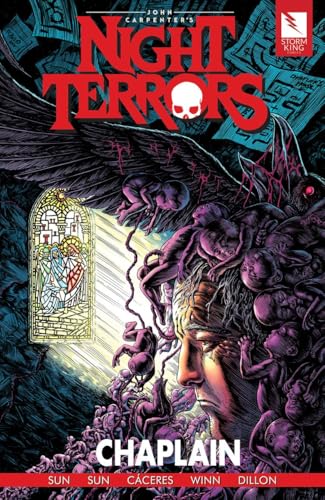
Title: John Carpenter's Night Terrors: Chaplain
Creator(s): Brad Sun, The Rev. Wesley Sun, Raúlo Cáceres, Ryan Winn, and Marshall Dillon
Publisher: Storm King Comics
ISBN: 979-8992811650
Order Direct Here
Order via Graphic Medicine Bookshop
There are few working environments more intense than hospitals. The maze like buildings. The constant blaring of alarms and cries of pain, anguish, grief from the patients, families, and at times even the providers. The endless cycles of admission, treatment, death that don’t come linearly and overlap endlessly. I think it is a little surprising, then, that there are so few published horror comics set in this space! The latest entry in the John Carpenter’s Night Terrors series, Chaplain, co-created by brothers Brad Sun and Rev. Wesley Sun (a chaplain), along with creators Raúlo Cáceres, Ryan Winn, and Marshall Dillon, seeks to fill that gap.
If you want a short take on this comic, I’d say it is a mash-up of the kindness you’d sometimes find in episodes of M*A*S*H, the not-really-that-over-the-top drama of The Pitt, and the mythological body horror often at play in Junji Ito’s manga. It is going to appeal to horror fans, first and foremost, but I think the medical stories will pull in readers from beyond the horror space, if they’ll just give it a chance.
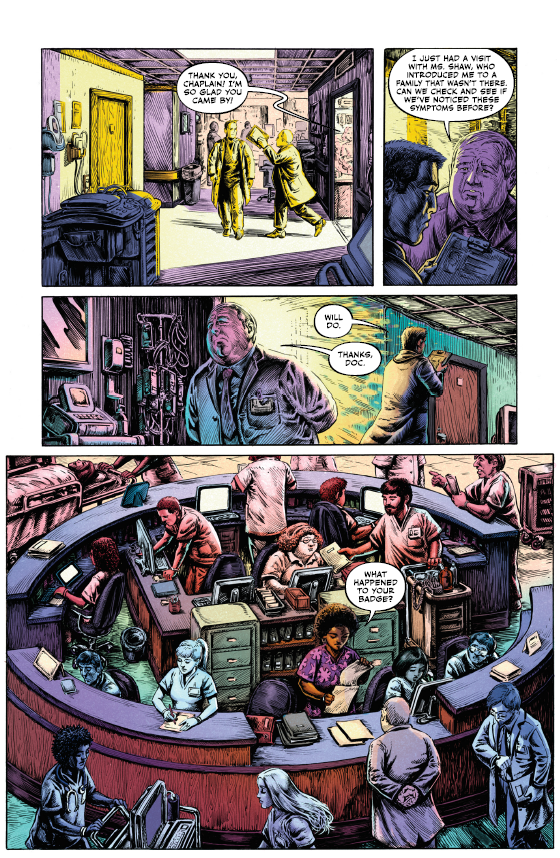
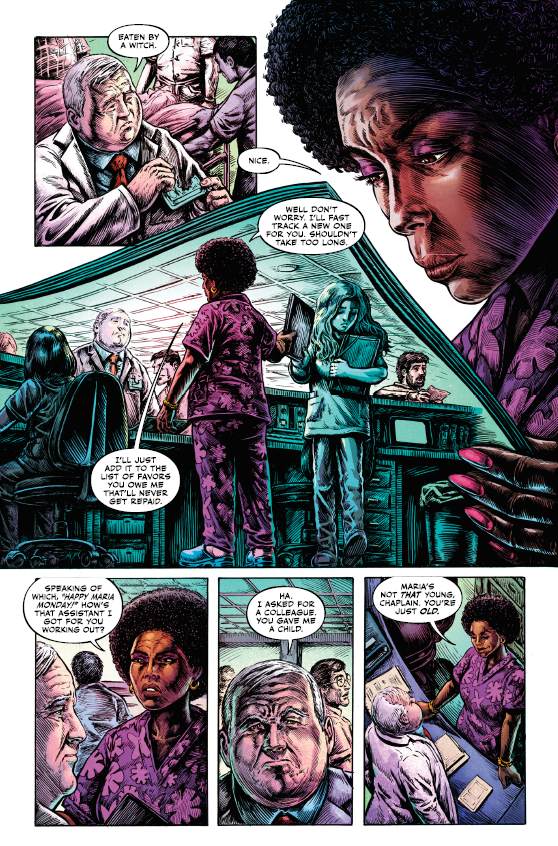
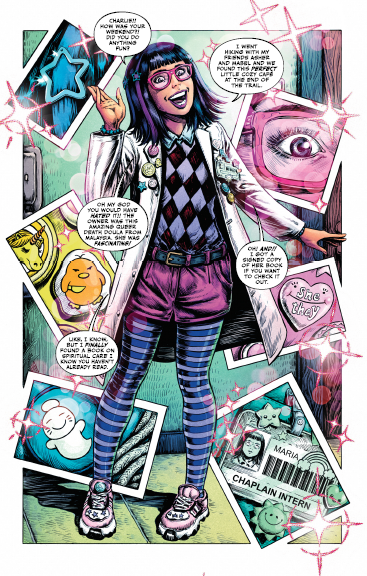
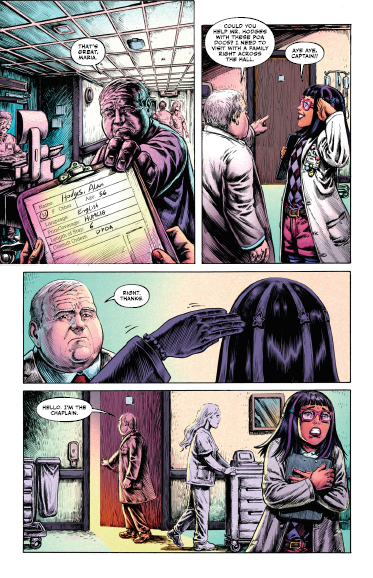
Chaplain follows the days-in-the-life of nearing retirement (and perhaps end of life himself) Charlie (no, his last name is not Chaplain) and his protégé Maria as they provide chaplaincy services to a cast of patients in various stages of need. The horror elements of the comic are fairly light early on in the story, as we experience the chaos of the hospital, the grief, terror, and confusion held by patients and, if only a little, absorbed by the chaplains as they offer a listening ear, kind words, and, if requested, spiritual comforts and prayers. In fact, I’d suggest that the non-horror elements of this comic are a perfect introduction to what exactly it is hospital-based chaplains do, where they fit into the medical system, and vital insights into the burnout that comes with, in essence, providing an outlet for the hardest moments in others’ lives. I’ve included a sequence of pages below early in the book that highlights the artist approach of the book, but more importantly for graphic medicine folks, a scene that would work perfectly for a classroom deep reading exercise.
While I won’t spoil too much of the horror here, as the comic progresses, the body horror becomes more visceral, less hidden, and it becomes clear that not all is right with Charlie. What begins as a moment of growth for Maria as she recounts one of her culture’s myths – the Aswang, a shapeshifter who seeks to consume part of a person to sustain itself, which leaves behind pain, misfortune, suffering – to a number of patients, quickly turns out to be much more real than not. From here, things quickly take a turn for the horrific and it is up to the reader to decide just where the line between reality and fiction should be drawn. The artist teams’ panel layouts that encourage you to pay close attention and build off of everything from a fly’s eyes to the stains on a hospital glove force you to slow down and really engage with the art. This is not a comic to speed read!
Based on a combination of real chaplain experiences, body horror, and a mythological Asian monster, Chaplain invites us to consider a question both mundane in its normalcy and profound in its impact how we exit this life: how will we respond when the time comes?
Readers should be prepared for psychological horror, infant death, gore, and violence.
Librarians: Chaplains is firmly an adult comic (Storm King rates it Mature) and is most likely to appeal to horror fans. It may take a little bit of encouragement to get your typical graphic medicine reader to pick it up, but I think it is worth giving them that nudge.

Leave a comment